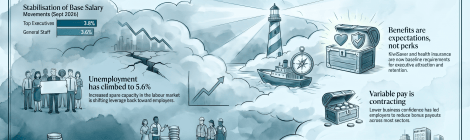
Adapting Pay Strategies in a Crisis: A Guide for NZ Employers

MHR Global has just released the findings from our March 2026 pay survey. It’s worth noting upfront however, that the data was collected before 28 February 2026, which is when the first USA/Israel strikes on Iran took place. That means the survey largely captures decisions that were made before the conflict began, and before the global fuel crisis that followed, so the analysed data doesn’t reflect how either of those things has started to affect pay practices on the ground.

To fill that gap, this article looks at how New Zealand’s current fuel and energy crisis is already changing the shape of the labour market, covering both the results of that survey analysis, and what we’re starting to see in recruitment, retention, and remuneration as of March 2026.

Read Article →

Myth Busted: Remuneration Levels in Small and Large Organisations

A long-standing theory in employment circles suggests that the pay level for a role in a small business will pay less than a comparable role in a larger operation. I examine the validity of this by drawing on the results from MHR Global’s March 2024 pay survey.

Read Article →

Managing pay increase expectations is a challenge

In this quasi post-Covid period, with many employers still grappling with the challenges of operating in a widely changing employment environment, we have seen a regular appearance of media articles encouraging employees to seek new roles outside their current employer. The implied suggestion is that this is the only way in which employees can expect to get any reasonable increase in remuneration. Employers will need to manage the expectations created by this discussion.

Read Article →

Covid-19 Impact on Pay Levels is limited. . . so far

There is widespread recognition that Covid-19 has posed substantial challenges in both the public health and economic arenas. At least part of that economic challenge is focussed on employment and employee management, with many employers taking difficult employment decisions to cope with lower income and funding. We examine these perceptions in the light of the latest MHR Global salary survey results.

Read Article →