Adapting Pay Strategies in a Crisis: A Guide for NZ Employers
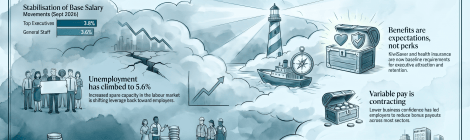
MHR Global has just released the findings from our March 2026 pay survey. It’s worth noting upfront however, that the data was collected before 28 February 2026, which is when […]
Unlock the latest insights into executive remuneration with our summary of MHR Global’s September 2025 “Top Executive Update” report! Read also about how AI developments are impacting on jobs and pay practices.
A long-standing theory in employment circles suggests that the pay level for a role in a small business will pay less than a comparable role in a larger operation. I examine the validity of this by drawing on the results from MHR Global’s March 2024 pay survey.
There is a long-held perception in New Zealand that pay rates within the Not for Profit (NfP) sector are not as generous as those available in other sectors. Pay increases are also thought to be less competitive. It is generally thought that this “practice” flows from a preference by organisations within the sector to direct funding towards the delivery of services rather than to the recruitment and retention of staff on competitive pay. This article drills into the results from MHR’s March 2024 pay survey to establish whether there is any truth in these perceptions.
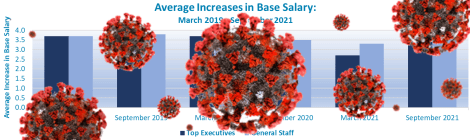
Top of mind for many employees on the back of predicted high inflation for March 2024, is the ongoing gap between average base salary increases and the level of inflation post the Covid-19 pandemic. This raises concerns about the erosion of purchasing power of employees.
In this quasi post-Covid period, with many employers still grappling with the challenges of operating in a widely changing employment environment, we have seen a regular appearance of media articles encouraging employees to seek new roles outside their current employer. The implied suggestion is that this is the only way in which employees can expect to get any reasonable increase in remuneration. Employers will need to manage the expectations created by this discussion.
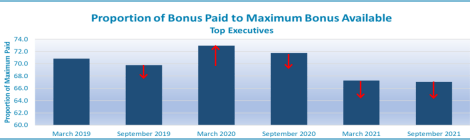
Bonus and incentive payments linked to organisation and individual performance and contribution, have long been a feature for a large proportion of executives across all industries. How have those payments fared during the Covid crisis? We draw on the MHR Global September 2021 pay survey to answer.
In the past 18 months COVID-19 has become something of an ever-present factor in all aspects of life in New Zealand and globally. The question many employers are now facing is whether to continue policies which were designed to cope with reduced income and funding, or are we now at the point where the constraints imposed by Covid-19 need to be lifted. MHR Global’s latest survey of pay rates may have an answer.
There is widespread recognition that Covid-19 has posed substantial challenges in both the public health and economic arenas. At least part of that economic challenge is focussed on employment and employee management, with many employers taking difficult employment decisions to cope with lower income and funding. We examine these perceptions in the light of the latest MHR Global salary survey results.
Pay increases which have been largely static in recent years are finally showing some – slight – upward movement. But does this necessarily result in any significant lift in underlying pay levels? MHR Global’s September 2019 results explore this in more detail.